AQUA-BIOPRESS
Bioindicators and anthropogenic pressures in aquatic systems of the Mura-Drava-Danube Biosphere Reserve
Project summary
The project aims to investigate the diversity of planktonic and periphytic communities in freshwater ecosystems of the UNESCO Biosphere Reserve Mura-Drava-Danube, with the goal of understanding the influence of environmental and anthropogenic factors on their structure and function. Field research will be conducted during spring and summer under different hydrological conditions. The physicochemical parameters of the water, as well as planktonic and periphytic communities, will be analysed using standard species identification methods and modern molecular analysis techniques. The stable isotope method will be used to monitor food web interactions, carbon and nitrogen sources, and the impact of organic matter input from land on aquatic ecosystems. The experimental part of the research will be conducted under controlled conditions and will enable assessment of the effects of anthropogenic pollutants on the target communities. The project will foster international cooperation and provide professional training for doctoral and postdoctoral students. All collected data will be consolidated in a structured digital database. The project results will contribute to strengthening research capacities, and improving understanding of ecological changes in freshwater ecosystems. The results will also enable long-term and effective management of natural resources, with the aim of preserving ecological balance and promoting the sustainable development of the world's first transboundary biosphere reserve, which extends across the territory of five countries and is under UNESCO protection.
Implementation time: 2025. – 2029.; 48 months
Financing amount: 143,000.00 EUR
Sep 4, 2026
Research within the AQUA-BIOPRESS Project
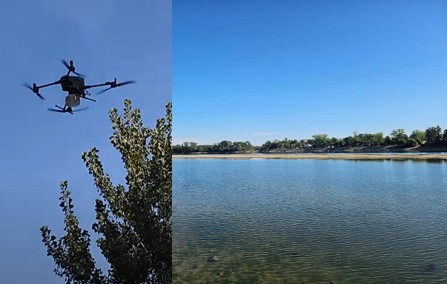
In August and September 2026, field research on water bodies continued as part of the project “Bioindicators and Anthropogenic Pressures in the Water Systems of the Mura-Drava-Danube Biosphere Reserve” (AQUA-BIOPRESS). The project enabled the procurement of a drone equipped with a water sampler, which was used for the first time in field research. This advanced equipment provides an effective solution for environmental monitoring and water management, particularly in hard-to-reach or potentially hazardous locations. Its use eliminates the need for boats and reduces the exposure of researchers to potential hazards during fieldwork. The project is financed by the European Union under the Next Generation EU programme.
Aug 6, 2026
Training of collaborators from Poland
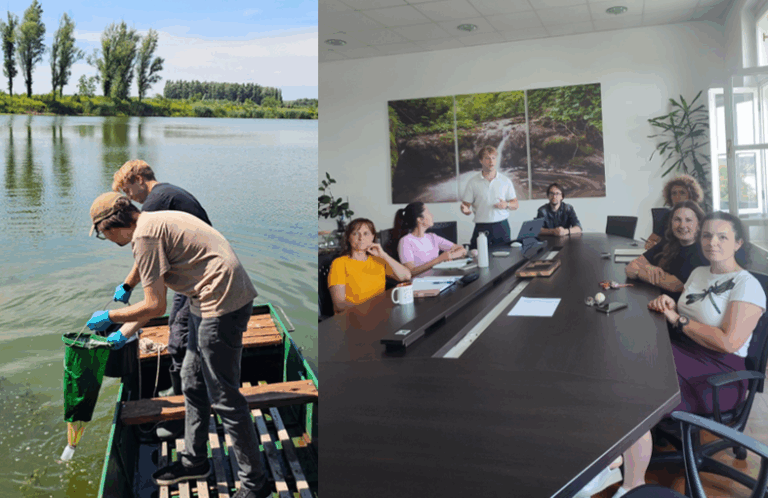
Doctoral students Kacper Kawalski and Rafal Wild (Doctoral School of the Warsaw University of Life Sciences, Warsaw, Poland) stayed at the Sub-Department of Water Ecology (Department of Biology), as part of short-term academic mobility from 15 to 24 July 2026. The aim of the professional training was to acquire practical knowledge about the ecology of freshwater ecosystems through field and laboratory work, to learn methods of sampling plankton communities and accompanying limnological factors, processing biological material, and qualitative and quantitative analysis of plankton organisms. The doctoral students also presented their previous research and the results obtained in the course of their doctoral dissertation work, and offered suggestions for applying the acquired knowledge in new research activities.
Academic mobility was carried out as part of international cooperation on the project “Bioindicators and anthropogenic pressures in the water systems of the Mura-Drava-Danube Biosphere Reserve” (AQUA-BIOPRESS), financed by the European Union within the Next Generation EU programme. Academic mobility is financed through the Polish National Agency for Academic Exchange (NAWA; PROM 2025 Agreement no. BPI/PRO/2025/1/00009/U/00001; “Prom – Short-Term Academic Exchange”).